Sciatica Is Not Just Back Pain — Here Is the Difference and Why It Matters
If you have been told your shooting leg pain is "just a back problem," you are not getting the full picture. Sciatica is nerve pain — and nerve pain requires a fundamentally different approach to treatment than muscle or joint pain. Getting this distinction right is the single most important step toward faster recovery.

Studies consistently show that patients who receive a specific sciatica diagnosis — rather than a generic "back pain" label — recover faster and with fewer recurrences. The diagnostic precision matters as much as the treatment itself.
The Anatomy Behind the Pain
Your sciatic nerve is the largest nerve in your body — roughly the width of your thumb at its widest point. It originates from nerve roots in your lower lumbar spine, passes through your buttock via the sciatic notch, travels down the back of your thigh, and branches into your lower leg, ankle, and foot.
Every part of that pathway can be a site of pain, numbness, or weakness — depending on where the nerve is being compressed. This is why two patients with sciatica can have completely different symptom locations, yet both have the same underlying diagnosis of sciatic nerve compression.
What Sciatica Actually Feels Like
Patients describe sciatica in remarkably consistent ways:
- A deep, burning ache in the buttock that extends into the leg
- Sharp, electric jolts that shoot down the leg with movement or position changes
- Numbness or a "dead leg" feeling in the calf or outer foot
- Weakness when lifting the foot — some patients describe dragging the foot slightly
- Sitting is worse than standing; lying flat is usually the most comfortable position
If this matches your experience, you are almost certainly dealing with sciatic nerve involvement — not a muscle strain.
The Most Common Mistake Patients Make
The most damaging mistake sciatica patients make is treating it like ordinary back pain — applying heat, rest, and generic physiotherapy while avoiding medical evaluation. While this approach works well for muscle pain, it consistently fails for sciatica because the source of the pain — nerve root compression — is not being addressed.
Specific exercises targeting nerve mobilisation and disc decompression work entirely differently from standard back stretches. A complete guide to sciatica relief in 8 minutes covers the exact movements — including neural flossing, piriformis stretching, and McKenzie extension — that target the sciatic nerve directly rather than the back muscles around it.
The L5 S1 Connection Most Patients Never Hear About
The overwhelming majority of significant sciatica cases originate from the L5-S1 disc level — the lowest disc in the lumbar spine. When this disc herniates or bulges, it places direct pressure on the S1 nerve root, producing pain down the back of the leg into the heel and outer foot, calf weakness, and a reduced ankle reflex.
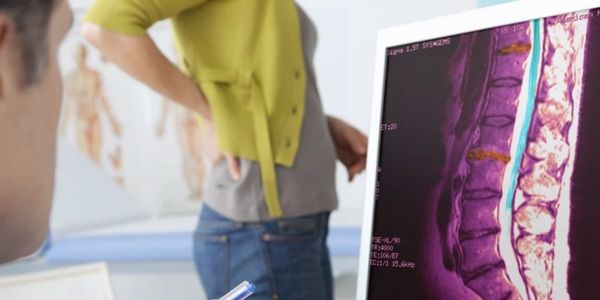
This is the most important level to understand because it is both the most commonly affected and the most treatable — with excellent outcomes from both conservative care and, when needed, minimally invasive microdiscectomy. Detailed information on L5 S1 disc bulge helps patients understand exactly what their MRI report means and what their treatment options look like.
Getting the Right Treatment
Effective sciatica treatment is always diagnosis-specific. After confirming the level of nerve compression, treatment typically follows a clear ladder:
- Targeted physiotherapy with neural mobilisation and directional exercises
- Anti-inflammatory medications — NSAIDs and neuropathic agents like pregabalin
- Epidural steroid injections when pain is too severe for physiotherapy
- Minimally invasive surgery — microdiscectomy — when conservative treatment fails after 12 weeks
Finding the best doctor for sciatica pain treatment in Delhi means finding a spine specialist — not a general practitioner — who can map your specific symptoms to a specific nerve root level and build a treatment plan around that precise diagnosis.
Conclusion
Sciatica responds excellently to targeted treatment when the root cause is correctly identified early. The longer nerve compression continues untreated, the longer recovery takes — which is why early specialist evaluation consistently produces better outcomes than prolonged self-management. Best Spine Surgeon in Delhi — Dr. Amit Shridhar provides expert, evidence-based sciatica care for patients across Delhi and NCR with a patient-first approach at every step.


Comments
Post a Comment