Is Your Leg Pain Actually Sciatica? A Complete Guide for Delhi Patients

Millions of people across India experience lower back and leg pain every year — yet a surprisingly large number of them are living with undiagnosed or improperly treated sciatica. If you have been told you have a "muscle problem" or "nerve weakness" without any imaging or specialist evaluation, there is a strong chance your diagnosis is incomplete.
This guide is written specifically for patients in Delhi and NCR who are experiencing leg pain, lower back pain, or radiating discomfort — and want to understand whether sciatica is the cause, and what to do about it.
The Anatomy Behind Your Pain
The sciatic nerve originates from five nerve roots in the lower lumbar and sacral spine — L3, L4, L5, S1, and S2. These roots merge in the pelvis to form the sciatic nerve, which is approximately the width of your thumb at its thickest point. It travels through the buttock, down the back of the thigh, and branches into the lower leg, ankle, and foot.
When any of the nerve roots contributing to the sciatic nerve are compressed or irritated, the pain, numbness, and weakness they cause can be felt anywhere along that entire nerve pathway — which is why sciatica can cause foot pain, ankle weakness, or calf numbness even when the actual problem is in the lower back.
This is the most important concept for sciatica patients to understand: the location of your symptoms is not the location of your problem.
Sciatica Symptoms — Beyond Just Back Pain
Most people associate sciatica with lower back pain — but the defining symptom is actually the leg pain. True sciatica typically produces:
1. Unilateral radiating pain — affecting one leg more than the other, following a dermatomal pattern down the buttock and leg. Bilateral sciatica can occur but is less common and may indicate central spinal stenosis.
2. Specific neurological deficits — depending on which nerve root is compressed:
- L4 compression: pain and weakness in the inner thigh and knee, reduced knee reflex
- L5 compression: pain down the outer leg and top of foot, weakness lifting the big toe
- S1 compression: pain down the back of the leg into the heel and outer foot, reduced ankle reflex
3. Postural aggravation — sciatica from disc herniation is typically worse with sitting and better with standing or walking. Sciatica from spinal stenosis behaves differently — worse with walking and standing, better with sitting and flexing forward.
Understanding these patterns helps an experienced spine specialist determine the likely cause and level of compression before imaging is even reviewed.
Why Delhi Patients Delay Seeking Specialist Care
In clinical practice, most sciatica patients have been managing their symptoms for months — sometimes years — before seeking specialist evaluation. The reasons are predictable:
The initial pain episode is attributed to a muscle pull or sprain and treated with rest and painkillers. When it partially improves, patients assume it has resolved. When it returns — often more severely — the cycle repeats with physiotherapy that has not been specifically targeted for nerve root compression.
The critical mistake is treating sciatica as a musculoskeletal pain problem rather than a neurological one. The sciatic nerve is a neural structure and requires neural treatment approaches — nerve mobilisation, specific directional exercises, and when necessary, decompression of the compressing structure itself.
Non-Surgical Sciatica Treatment — What Actually Works
When structured correctly and started early, non-surgical treatment resolves sciatica in the majority of cases:
1. Directional preference exercises — research consistently shows that many sciatica patients have a directional preference — movements in one direction centralise their pain while movements in the other peripheralise it. Identifying this preference and building an exercise programme around it is the foundation of the McKenzie Method, one of the most evidence-supported approaches for lumbar disc-related sciatica.
2. Nerve flossing and neural mobilisation — gentle rhythmic movements designed to mobilise the sciatic nerve through its path, reducing adhesions and inflammatory irritation around the nerve.
3. Epidural steroid injections — when pain is severe enough to prevent therapeutic exercise, a transforaminal or interlaminar epidural injection delivers corticosteroid directly to the inflamed nerve root. This provides significant relief in 70-80% of patients, creating a window for physiotherapy to take effect.
4. Lifestyle modifications — addressing sitting posture, sleep position, workplace ergonomics, and activity patterns that are aggravating the nerve.
Patients across Delhi seeking expert guidance for sciatic nerve pain should look specifically for the best doctor for sciatica pain treatment in Delhi — a spine specialist rather than a general orthopedic practitioner — to ensure their treatment is neurologically informed rather than simply musculoskeletal.
When Does Sciatica Need Surgery?
The clear surgical indications for sciatica are:
- Cauda equina syndrome — emergency
- Progressive neurological deficit despite conservative treatment
- Footdrop — weakness preventing normal walking
- Failure of 12 weeks of structured, supervised conservative treatment
- Intractable pain not responding to medications and injections
For patients reaching the surgical threshold, microdiscectomy performed by an experienced spine surgeon offers a 90-95% success rate for leg pain relief. The key question patients always ask is about cost — and spine surgery in India is significantly more accessible than most patients assume. Understanding the complete spine surgery cost in India — including procedure-specific costs, implant options, and insurance coverage — helps patients make informed decisions without financial anxiety driving their clinical choices.
Sciatica in Special Populations
1. Sciatica during pregnancy is common due to increased lumbar load and postural changes. Treatment is limited to physiotherapy, supportive devices, and positional modifications — with resolution expected after delivery in most cases.
2. Sciatica in elderly patients is more likely caused by spinal stenosis than disc herniation. The walking pattern is different — patients often describe needing to stop and bend forward to relieve leg pain (neurogenic claudication). Treatment approach and surgical options differ significantly from disc-related sciatica in younger patients.
3. Sciatica in athletes and young adults is often disc-related and responds excellently to targeted physiotherapy and activity modification. Return to sport is achievable for most young patients without surgery if treatment is started early.
The Role of Imaging in Sciatica Diagnosis
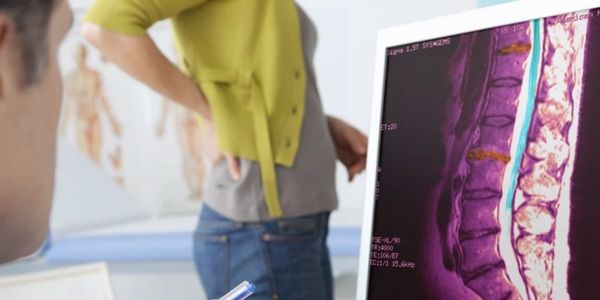
An MRI of the lumbar spine is the gold standard for sciatica investigation. It identifies the level of compression, the structure causing compression (disc, bone, ligament), and the degree of nerve involvement.
However — and this is critical — MRI findings must always be interpreted in the context of clinical symptoms. Disc bulges and degeneration are extremely common findings on lumbar MRI in asymptomatic people. A bulging disc visible on MRI is only clinically significant if it correlates with the patient's symptoms, neurological findings, and pain pattern. Over-reliance on imaging findings without clinical correlation leads to unnecessary surgery and under-treatment of the actual pain generator.
Conclusion
Sciatica is treatable — but only when correctly diagnosed and managed by a spine specialist with experience in the full spectrum of treatment options. Delhi patients deserve accurate diagnosis, structured conservative care, and surgical options when truly needed — not a one-size-fits-all approach that ignores the neurological complexity of sciatic nerve pain.


Comments
Post a Comment